
Conversation Guides: Navigating Difficult Conversations
In Case You Missed It: APBA Released Conversation Guides on Autism and Vaccines
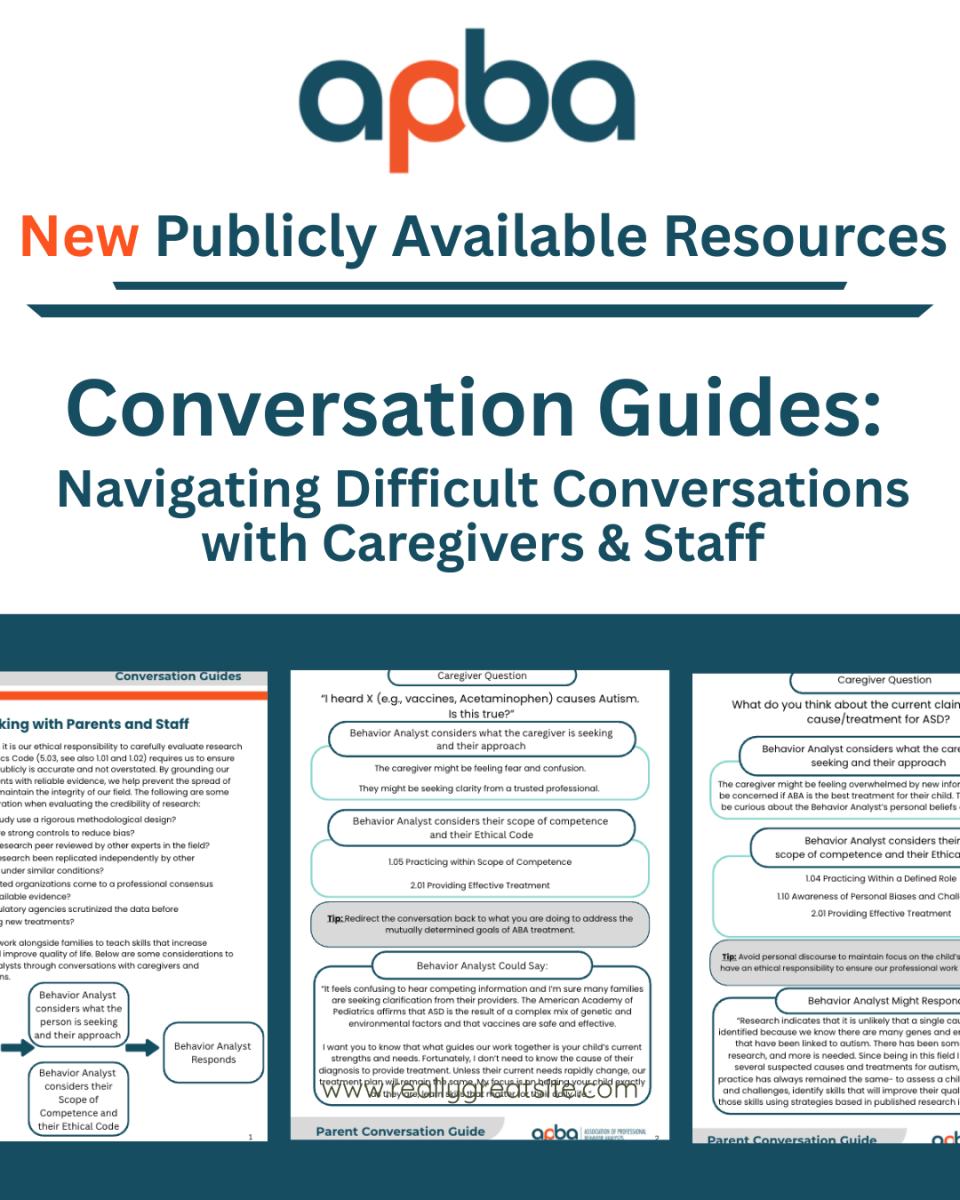
This quarter, APBA released new Conversation Guides to help behavior analysts navigate challenging conversations with caregivers and staff about autism, vaccines, and related claims. APBA stands with the American Academy of Pediatrics in affirming that vaccines do not cause autism spectrum disorder.
Behavior analysts are often asked to respond to questions rooted in fear, confusion, or misinformation. These guides were developed to support ethical, evidence-based, and compassionate communication while keeping practitioners within their scope of competence and aligned with the BACB® Ethics Code and the RBT® Ethics Code.
The Conversation Guides provide scenario-based scripts and considerations for common questions, including whether vaccines or medications cause autism, how to respond when caregivers ask about the causes of autism, and how to support families experiencing guilt or uncertainty. Guidance is also included for supervising and supporting behavior technicians who receive questions that should be redirected to supervisors.
Across all scenarios, the guides emphasize refocusing conversations on the child’s current strengths, needs, and treatment goals, reinforcing that effective ABA services do not depend on identifying the cause of a diagnosis.
These Conversation Guides are now available as part of APBA’s ethics resources and may be used for supervision, team training, and professional development. See these and other publicly available resources: APBA Conversation Guides.