
A letter from APBA President, Mahin Para-Cremer
As a professional organization, we recognize that the behavior analytic community is made up of individuals with many intersecting identities and lived experiences, including race, age, religion, sex, gender, and more. At APBA, we are intentional about creating spaces, both virtual and in person, that are inclusive, accessible, and affirming. Through our events and programming, we strive to ensure that every member, board member, and employee feels seen, valued, and able to fully participate in a way that cultivates a genuine sense of belonging. We believe that when we honor the fullness of our differences, we create stronger, more connected spaces for individuals and our field.
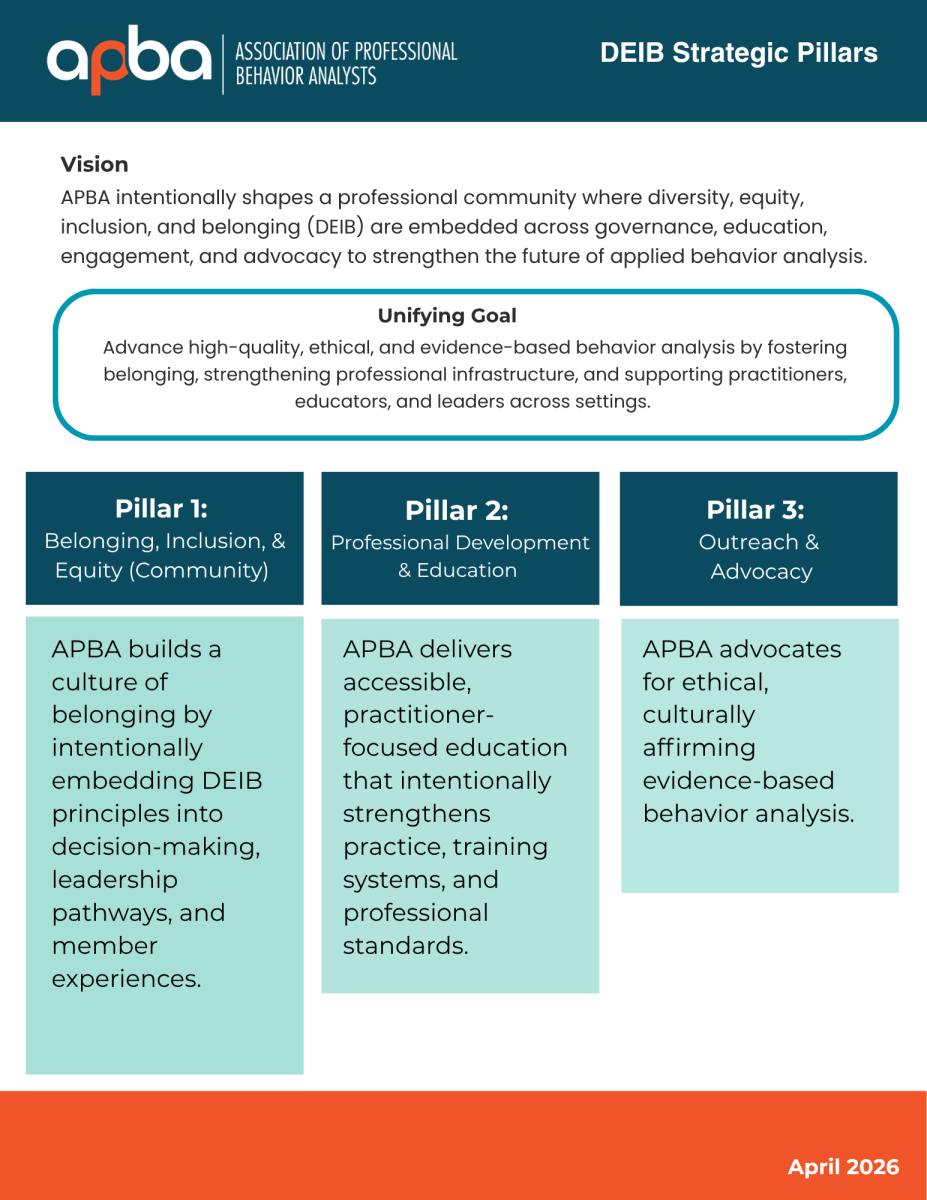
Last year, APBA’s Board of Directors identified and prioritized initiatives to tangibly and transparently embed Diversity, Equity, Inclusion, and Belonging in every aspect of APBA. We initially began engaging in exploratory work to implement our Guidance on creating values committed to equity and social justice for professional organizations. To extend this work, we engaged a consulting firm to guide us through discovery and implementation of processes to update policies and procedures and make structural changes within APBA. One example of this work is APBA's DEIB Strategic Pillars. These pillars establish a long-term framework for embedding diversity, equity, inclusion, and belonging throughout the organization by focusing on three priorities: (1) cultivating belonging, inclusion, and equity across governance, leadership, and the member experience; (2) expanding accessible, practitioner-focused professional development and education that strengthens practice and professional standards; and (3) advancing ethical, culturally affirming, evidence-based behavior analysis through outreach and advocacy. Together, these pillars provide a shared direction for ensuring that DEIB remains integrated into APBA's decision-making.
We are promoting a culture of safety within the Board of Directors by encouraging respectful disagreements, tough conversations, and critical questioning to support well-informed decision-making that moves the organization forward. One of the ways we’ve done this is by creating expectations for Board participation to ensure all directors have a shared understanding of their roles and responsibilities rather than relying on prior experiences. We have also developed a response guide which provides a comprehensive framework defining when and how APBA responds to events and incidents, grounded in our mission, vision, and values.
To reduce financial barriers for involvement with APBA, we began offering a complimentary first-year membership to all newly certified BCBAs and BCaBAs in 2026. This initiative reflects APBA's commitment to fostering a more inclusive and diverse membership by welcoming early-career professionals and ensuring they have opportunities to connect, contribute, and grow within the profession from the outset of their careers. To increase transparency and expand opportunities for member involvement, APBA keeps an open form on its website where members can express interest in a variety of volunteer opportunities, including reviewing convention submissions, serving on committees, and providing subject matter expertise for specialized initiatives, such as grant-funded projects. By making these opportunities visible and accessible year-round, we seek to broaden participation and ensure that APBA resources and experiences reflect the collective expertise of its membership.
We continue to provide consistent and dedicated DEI Training & Professional Development opportunities throughout the year. We offer at least two DEIB events during our monthly offerings and have elevated our Liz Hughes Fong Memorial Presentation to a keynote session at the Annual Convention to ensure that this important work receives prominent visibility. APBA is also working to identify and schedule at least one board-specific DEIB session annually to support informed and inclusive governance. While there are additional goals that we are continuing to work through, I think that I speak for the board when I say that we are really excited about the work that we have done so far and that the ongoing
improvements will support practitioners, staff, board members, and anyone who participates in our organization to know they are valued and that they belong with APBA.
I want to thank the board, the staff, and our DEI Subject Matter Experts for engaging in this process and for being vulnerable as we all listen and learn from each other.